
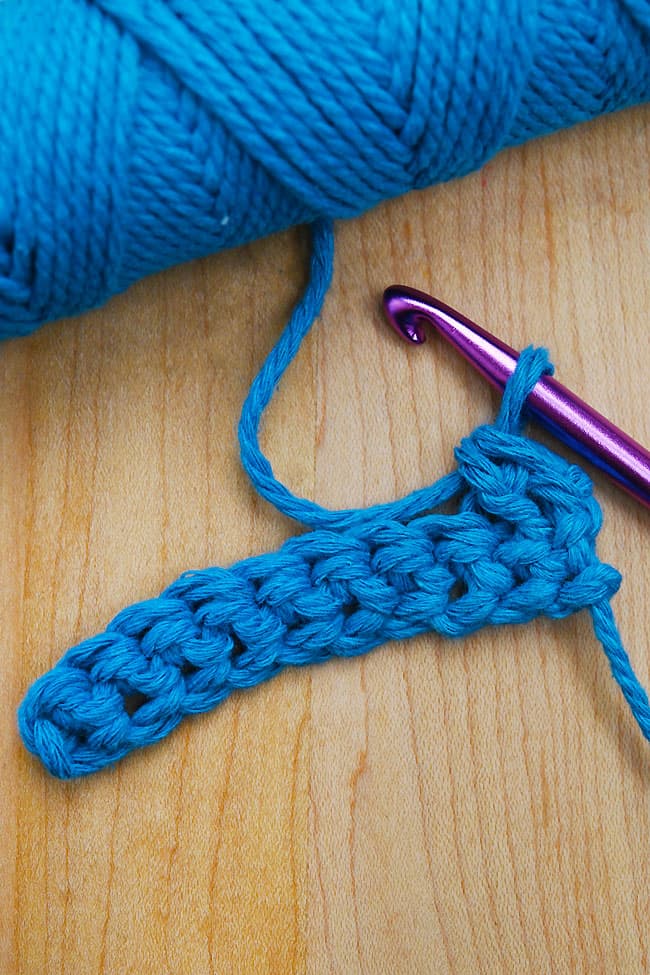
Learning how to decrease in crochet is an important skill that helps you shape your projects and create smooth, polished designs. Whether you’re making amigurumi, hats, or other crochet patterns, decreasing stitches allows you to gradually narrow your work and bring pieces together neatly.
In this tutorial, we’ll show you two common ways to decrease in crochet: the traditional single crochet decrease (sc2tog) and the invisible decrease. Both methods are simple to learn, and knowing when to use each one can help your crochet projects look cleaner and more professional. Follow along with the step-by-step instructions below to practice both techniques and add another useful crochet skill to your toolkit!
This post contains affiliate links. If you use these links to buy something, we may earn a small commission at no extra cost to you. This helps support our website and allows us to keep creating fun, free content.
How to Decrease in Crochet
Materials:
- Worsted weight yarn (or other yarn type)
Equipment:
See the craft in action:
Instructions:
How to Single Crochet Decrease (sc2tog):
- Start with a foundation. This can be a row of stitches or a 3D shape where you’re working in the round.For simplicity, we’ll show you how to decrease on a row of single crochet stitches.

- Begin by inserting your hook into the first stitch.
- Yarn over.

- Pull the yarn back through the stitch.
- You should now have 2 loops on your hook.
- Insert the hook into the next stitch.
- Yarn over.
- Pull the yarn back through this stitch.
- You should now have 3 loops on your hook.
- Yarn over.
- Pull the yarn through all 3 loops.
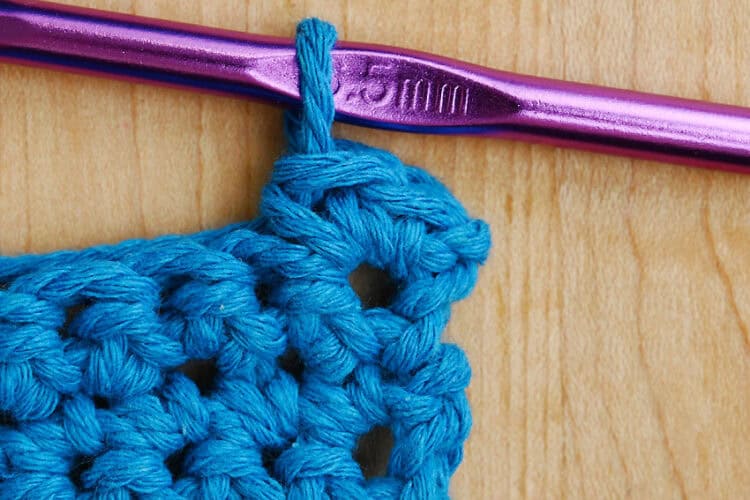
- Your decrease is now complete and 2 stitches have become 1.
- Here’s what it looks like when you decrease across.


How to Invisible Decrease:
- Start with your foundation. Again, this could be a round in a 3D shape, or a row of stitches you need to be smaller.Here we’re working with a row of single crochet stitches.
- Insert your hook in the front loop only of the first stitch.
- Then insert your hook into the front loop only of the next stitch.You should now have the front loops of the first 2 stitches plus the loop you started with on your hook.
- Yarn over.
- Pull the yarn through both stitches (again, just the front loops).
- You should now have 2 loops on your hook.
- Yarn over.
- Pull the yarn through both loops.
- Your invisible decrease is now complete!
- Here’s what it looks like when you invisible decrease across.
- And here’s a comparison of invisible decrease (on top) and regular single crochet decrease (bottom).


Helpful Tips:
- Learn more crochet basics: If you’re new to crochet or want to practice more techniques, take a look at our collection of crochet basics tutorials. You’ll find helpful guides for learning essential stitches and skills that will make following crochet patterns much easier!
- Watch for the abbreviation “sc2tog” in patterns: In many crochet patterns, a regular single crochet decrease is written as sc2tog, which stands for “single crochet 2 together.” This means you’ll work two stitches together to turn them into one stitch.
- Count your stitches after decreasing: Each decrease turns two stitches into one, so your stitch count will go down. Checking your stitch count after each row or round can help make sure your project stays on track.

What is a decrease in crochet?
A decrease in crochet means joining two stitches together to turn them into one stitch. This reduces the total number of stitches in your row or round.
Decreases are commonly used to shape crochet projects, allowing the fabric to narrow or curve as you work.
When are decreases used in crochet?
Decreases are used whenever a crochet pattern needs to reduce the number of stitches.
They are commonly used for:
- Shaping amigurumi and other 3D projects, like making the top of a stuffed toy or closing a sphere
- Creating tapered shapes, such as hats, sleeves, or stuffed animals
- Forming angled designs, like triangles or other geometric shapes
By gradually decreasing stitches, the opening of your work becomes smaller and the shape starts to close.

How many decreases should I make in each round or row?
Always follow the instructions in your pattern. Crochet patterns will tell you how many decreases to make and where to place them.
Keep in mind:
- 1 decrease = working 2 stitches together
- If a pattern says “decrease around” or “dec around,” it means you should repeat the decrease across the entire round.
- For example, if you start a round with 12 stitches and decrease all the way around, you’ll end the round with 6 stitches.
Which type of crochet decrease should I use?
The best decrease to use usually depends on the project and the pattern instructions.
- Regular decreases (sc2tog) are great for beginners because they’re simple and easy to learn.
- Invisible decreases are ideal for amigurumi and other 3D crochet projects, where a smooth, clean surface looks best.
- For flat projects like scarves, blankets, or other items where both sides of the fabric will be visible, a regular decrease often works best.
If a pattern specifies which decrease to use, it’s usually best to follow those instructions.

What’s the difference between regular decrease and invisible decrease?
A regular single crochet decrease (sc2tog) works through both loops of the stitches. This method is simple and commonly used, but it can sometimes create a slightly thicker or bumpier stitch, especially in tight crochet projects.
An invisible decrease works only through the front loops of the stitches, which helps the stitches blend together more smoothly. This technique reduces the appearance of bumps and creates a cleaner finish.
Because of this, invisible decreases are especially popular in amigurumi and other 3D crochet projects.
Another small difference is that the regular decrease looks the same on both sides of the fabric, while the invisible decrease looks slightly different on the back.

Learning how to decrease in crochet is a simple skill that can make a big difference in the shape and finish of your projects. Whether you use a regular single crochet decrease (sc2tog) or an invisible decrease, both techniques help reduce stitches and create smooth, well-shaped designs.
With a little practice, you’ll be able to use decreases confidently in everything from amigurumi and hats to blankets and other crochet patterns. Try both methods in your next project and see which one works best for the look you want to achieve!
Here’s even more fun crochet ideas:


Now available
Low-Mess Crafts for Kids Book
72 cute and fun crafts that kids and parents alike can enjoy. All with as little mess as possible!
Where to buy:
You can purchase Low-Mess Crafts for Kids from Amazon, or wherever books are sold:
Amazon | Barnes and Noble | Books-A-Million | Indiebound | Amazon Canada






Leave a Reply