

Add some egg-citement to your Easter celebrations with fizzy Easter eggs! Both kids and adults will love watching the eggs bubble up to reveal vibrant, colourful designs. This DIY Easter craft is a playful twist on traditional egg decorating with a cool science experiment built in.
This creative and hands-on activity is as fun as it is educational. Let the kids choose their favourite colours, and enjoy the almost magical reaction as each egg fizzes when it interacts with the vinegar solution. With just a few pantry staples, you can easily try this fizzy Easter egg dyeing project at home!

This post contains affiliate links. If you use these links to buy something, we may earn a small commission at no extra cost to you. This helps support our website and allows us to keep creating fun, free content.
How to Make Fizzy Easter Eggs
Materials:
- Baking soda
- Food colouring (multiple colours)
- Hard boiled eggs
- White vinegar
Equipment:
- Small bowls (or paint palette)
- Popsicle stick (or spoon, for stirring)
Watch the step-by-step video tutorial:
Instructions:
Step 1: Find what you need
- Gather your supplies and materials.


Step 2: Prepare your colours
- Add 1 Tablespoon of baking soda to a small bowl or section of a deep paint palette. Repeat this for as many colours as you’d like. (If you want 6 colours, you’ll need 6 small bowls with 1 Tablespoon of baking soda in each.)
- Add 1 Tablespoon of water to each bowl so you have a 1:1 ratio of baking soda to water.

- Add about 6 drops of food colouring to each bowl. (Some lighter colours will need more.)
- Use a clean popsicle stick or spoon to stir each colour, mixing the baking soda and colour into the water.


Step 3: Paint the egg
- Hold a hardboiled egg above a clean bowl.We recommend wearing nitrile gloves to dye your eggs so you don’t dye your fingers too!
- Using a paintbrush, add some of the baking soda paint mixture to the egg. Make sure you’re getting the “sandy” part of the paint, not just coloured water. For a true “marbled” look, add the same colour to different sections across the egg.
- Repeat, adding different colours of paint to the egg.


Step 4: Add the vinegar
- Set the egg in the empty bowl and pour vinegar on top of it. Pour slowly so the chemical reaction doesn’t erupt over the sides of the bowl.
- Let the reaction settle down and the marbled egg design will appear.
- Rinse the egg under cold water to remove any remnants of the baking soda paint.
- Your fizzy Easter egg is complete!
- Each egg you make will have its own beautiful, unique look!


Helpful Tips:
- Be careful not to leave the egg sitting in the vinegar after it’s stopped fizzing (or even if it’s still fizzing weakly). It will dye the part of the egg sitting in the vinegar with the colour in the bowl (usually a brownish mix, depending on the colours you used).
- Be generous when adding the food colouring. The colours will be paler when you apply them than they look in the bowl, so aim for a strong colour.
- If your egg colours are too pale, you can rinse the egg and try again. The egg won’t return to white, but you can paint over the light colours. Just be sure to add more food colouring to your bowls, or your second attempt won’t be any stronger in colour.

What causes the reaction in this fizzy egg science experiment?
When making these fizzy Easter eggs, combining the baking soda paint (a base) with vinegar (an acid) creates a gas called carbon dioxide. This is the same gas we exhale after we breathe in oxygen. You can see and hear the reaction, and sometimes even feel the bubbles popping if you hold your hand close enough.
Baking soda and vinegar experiments are not only great teaching tools about acid-base reactions, but they also illustrate changes in states of matter. This reaction shows a solid (baking soda) combining with a liquid (vinegar) to create a gas (carbon dioxide)! You can see a visible representation of this with baking soda and vinegar balloons.
What food colouring is best for my fizzy Easter egg dyeing?
Almost any food colouring should work for your fizzy Easter egg dyeing project. Some colours may be more vibrant than others, so you might need to add extra drops, but they will still dye the eggs beautifully.
With the wide variety of food dye options available today, you can even experiment with neon food colouring for bold, vibrant hues. We recommend avoiding pastel food colours for this activity, as the shades will be paler on the eggs than they are in the bowls.

How can I protect my work surface when making fizzy eggs?
To prevent staining your work surface during fizzy Easter egg dyeing, take a few simple precautions to protect it from any vinegar overflow. The vinegar mixture used in this experiment can sometimes bubble over, potentially colouring your countertop or table. Pouring the vinegar slowly will help control the intensity of the fizzing reaction, but it’s best to take extra care to avoid spills.
Place your bowl of fizzy eggs on a rimmed baking sheet, glass baking dish, or cake pan to catch any overflow. Alternatively (or in addition), cover your workspace with a water-repellent tablecloth (like plastic or vinyl) to shield your table or counter.
Be sure to perform the fizzy egg experiment away from the edges of your workspace to prevent spills onto the floor. For added safety, consider taking the fun outside to limit the mess.

How can I control the amount of vinegar I add during this fizzy egg experiment?
If you’re struggling to control the vinegar pour during the fizzy Easter egg dyeing, try adding a small amount into a measuring cup. Pouring from the measuring cup allows you better control the amount of vinegar added to the egg dye mixture and ensures the reaction stays manageable. This method is especially helpful for kids.
For younger children, using a pipette is a great solution. This small tool only holds a limited amount of vinegar, helping prevent over-pouring and keeping the experiment safe and fun. For older kids, consider a squeezable bottle—they can easily add the vinegar, and the flow will stop when they stop squeezing, giving them more control over the reaction. These options allow for a low-mess Easter project with kids!

These fizzy Easter eggs are a great way to get creative and experiment with science! Whether you’re arranging an Easter egg hunt or creating a colourful centerpiece for Easter dinner, they’re a magical way to bring festive joy to any space. With their interactive, bubbly nature, these marbled Easter eggs will be the showstopper of your springtime gatherings!
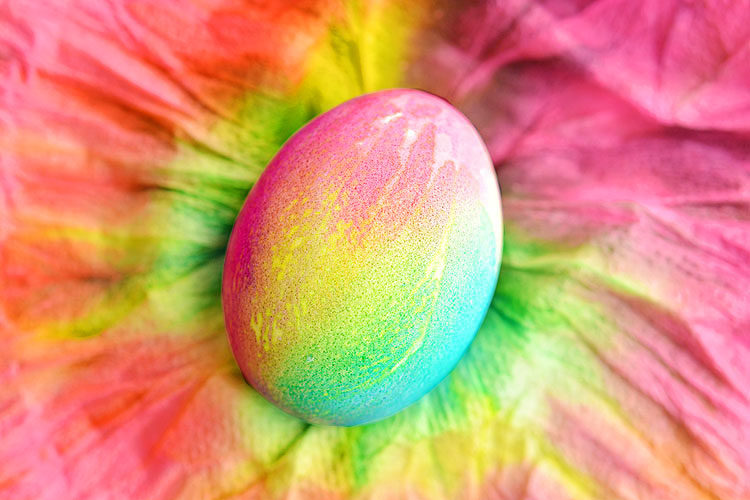
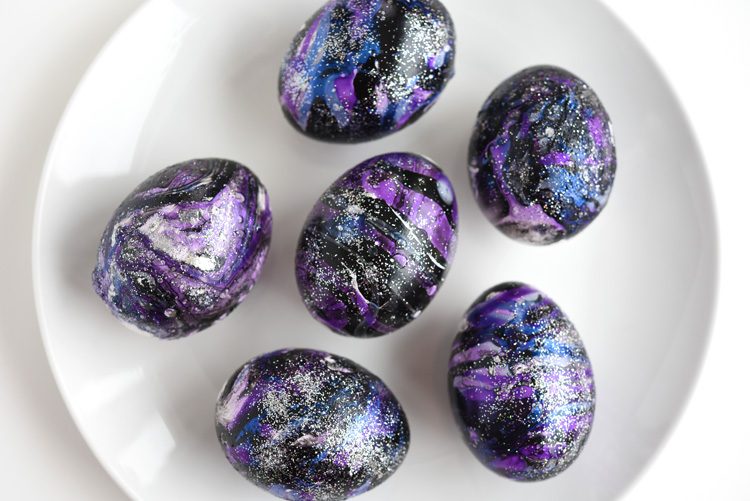
Here’s even more Easter egg decorating ideas:

Now available
Low-Mess Crafts for Kids Book
72 cute and fun crafts that kids and parents alike can enjoy. All with as little mess as possible!
Where to buy:
You can purchase Low-Mess Crafts for Kids from Amazon, or wherever books are sold:
Amazon | Barnes and Noble | Books-A-Million | Indiebound | Amazon Canada


Leave a Reply