
This paper worm experiment is SO FUN! Did you know that you can transform a regular piece of paper towel into a wriggling, growing worm?! It’s so easy!
This hands-on science experiment is really cool, whether you’re at home or doing a lesson at school. Just add a bit of water and prepare to be amazed as the paper worms grow and wiggle right before your eyes!

This post contains affiliate links. If you use these links to buy something we may earn a small commission which helps us run this website.
How to Do the Paper Worm Experiment
Materials:
- Paper towel
- Washable markers
- Glue stick
- Black Sharpie marker (or other permanent marker)
- Water
Equipment:
- Drinking straw (or pencil, skewer, etc)
Watch the step-by-step video tutorial:
Instructions:
Step 1: Find what you need
- Gather your supplies and materials.


Step 2: Draw the inside colours
- Start by setting down a piece of paper towel with the long side facing you. We recommend placing the paper towel on a placemat or extra piece of paper to protect your working surface from the markers.
- Use a coloured washable marker to draw vertical lines from the top of the paper towel down to the middle. Space the lines just over 1 inch apart.
- Now draw lines in between the previous ones with a complementary colour of washable marker.


Step 3: Roll the paper towel
- Flip the paper towel upside down, so that the marker lines are at the bottom and they face your working surface.

- Set a drinking straw or pencil at the bottom center of the paper towel.
- Begin rolling the paper towel around the straw. Roll it somewhat tightly, but leave enough slack that you’ll be able to remove the straw later on. Stop rolling when there’s about 1 inch of paper towel left.
- Apply glue stick to the unrolled part of the paper towel.
- Continue, rolling the paper towel into the glue and pressing it down to secure it.


Step 4: Draw the outside pattern and scrunch it up
- Grab a black Sharpie or another type of permanent marker. Use this to draw a pattern of lines or dots across the rolled up paper towel.
- Hold the center of the paper towel in place as you begin scrunching up one side, bringing it in towards the middle.
- Repeat on the other side until the “worm” is as small as possible.
- Remove the straw from the center of the paper towel roll, being careful to keep the worm as small and scrunched up as possible.


Step 5: Just add water!
- Set your worm on a plate or another dish. A rimmed baking sheet or pie plate will work well. Now pour a little bit of water on top of the worm. You’ll start to see it growing right away!
- Allow the worm to sit in the water for a few seconds. It will continue to grow and you’ll begin to see the marker colours showing through! If your worm still has dry spots, add a bit more water.
- Eventually your worm will be fully grown and you’ll clearly see the colours. Your paper worm experiment is complete!


Helpful Tips:
- You can make smaller worms by cutting the paper towel in half crosswise.
- Anything drawn with washable marker will spread when the water is added, while the permanent marker will stay where it is.

What’s the best way to add water onto a paper worm?
If you have good control you can pour the water out of a measuring cup, like we did. But younger kids may prefer to use an eyedropper. This is a fun tool, great for building hand strength, and it ensures only a small amount of water is added to the worms at one time.
Or stick the end of the straw in some water and place your finger on the top to trap the water inside. Hold the straw above the worm and raise your finger up to let the water fall out.
Another easy and simple way to control the amount of water added is to scoop up the water with a small teaspoon or measuring spoon.

What type of paper do I need for the paper worm experiment?
We found that paper towel had the best absorbency, which made the worms grow the most and wiggle the best. But you can also use facial tissues (Kleenex), tissue paper, or a straw wrapper.
What can I roll the paper worm around?
Any cylindrical object will do to form these growing worms! If you don’t have a straw handy you can also use a pen, marker, pencil, chopstick, paintbrush handle, or wooden skewer.
Thinner objects, like the skewer, will result in a skinnier worm, while thicker markers will make wider worms!

How does the growing worms science experiment work?
Imagine dipping the end of a paper towel into a glass of water. The water will climb up the paper towel all by itself, right? Well that’s capillary action, the same scientific principle at work here!
Capillary motion involves both cohesion and adhesion. Cohesion means that the water molecules want to stay together, like they’re holding hands really tightly.
But adhesion means the water wants to be friends with the paper towel too! Adding water to the paper towel makes the adhesion stronger than the cohesion.
Then the water molecules begin to spread across the paper towel, since it’s a porous material – meaning it can absorb liquid. The water then spreads and travels through the tiny spaces in the paper towel. As the liquid is propelled along the paper towel the paper expands back to its natural size, giving the illusion that the worm is growing and wriggling.

Have fun exploring colour and science with this simple wiggly worm experiment. It’s so cool to see how a little bit of water can make the paper towel worms come to life and expand, as if by magic.

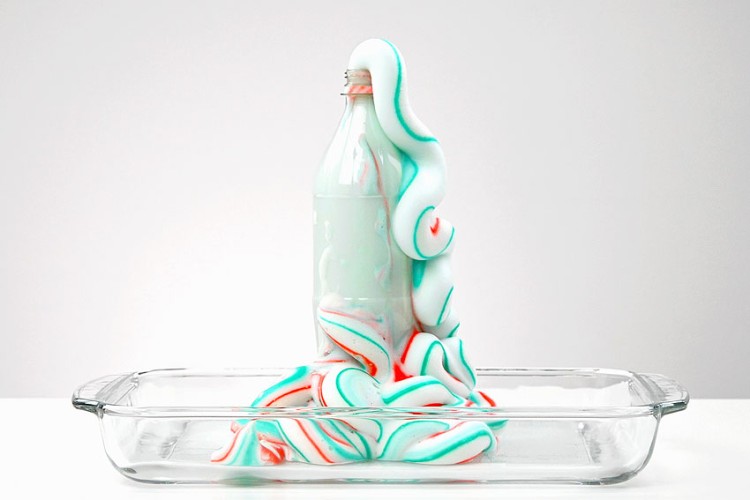
Here’s even more fun science experiment ideas:


Our book Low-Mess Crafts for Kids is loaded with 72 fun and simple craft ideas for kids! The projects are fun, easy and most importantly low-mess, so the clean up is simple!
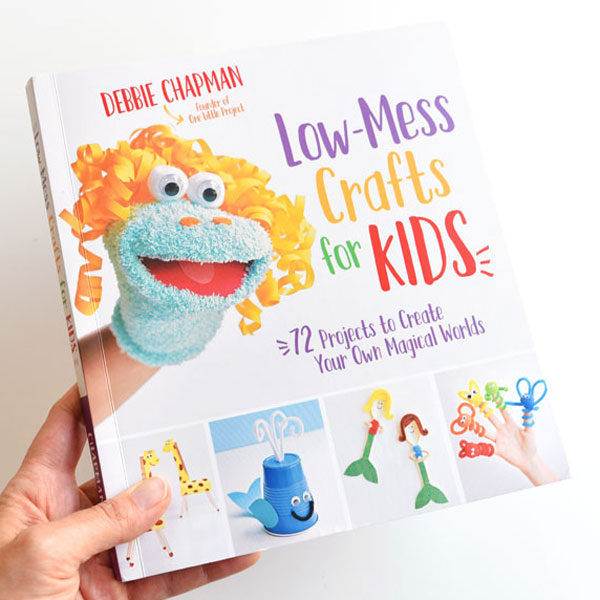
Where to buy:
You can purchase Low-Mess Crafts for Kids from Amazon, or wherever books are sold:
Amazon | Barnes and Noble | Books-A-Million | Indiebound | Amazon Canada



Leave a Reply