
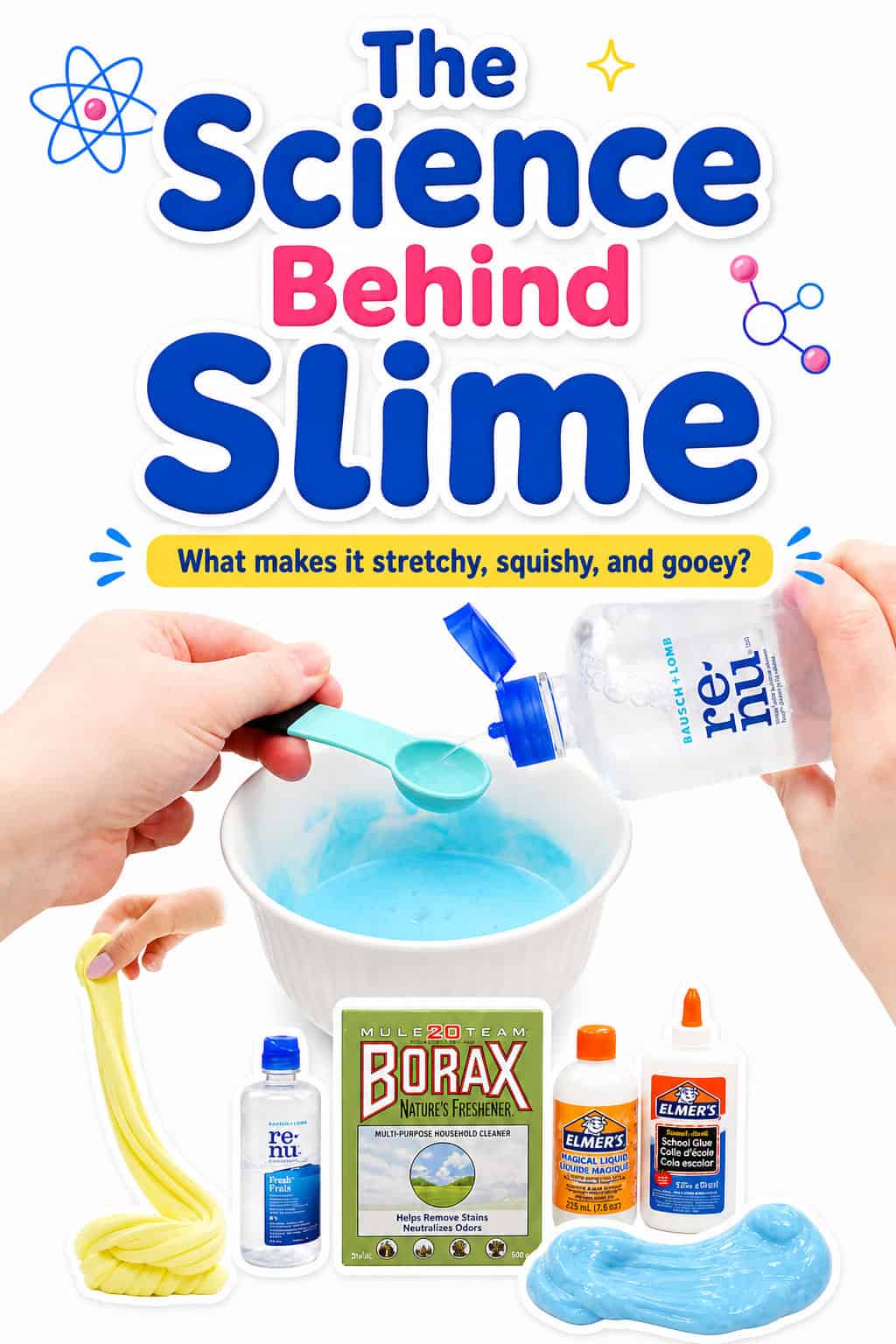
The science behind slime is actually pretty cool, and it’s a great way for kids to explore basic chemistry hands-on. We’ve made a lot of slime over the years, and it never seems to get old. Fluffy slime, clear slime, butter slime, glossy slime, crunchy slime, and even more! There’s something so fun about mixing a few simple ingredients and watching them turn into something stretchy, squishy, and wonderfully gooey.
After making so many slime recipes, we started wondering about the science behind it all. What is slime? How does slime work? And why does slime form? Slime might seem like a simple craft, but it also shows how ingredients can react, connect, and change texture into something totally different. In this guide, we’ll break it all down for you!
This post contains affiliate links. If you use these links to buy something, we may earn a small commission at no extra cost to you. This helps support our website and allows us to keep creating fun, free content.
What is slime?
Slime is a stretchy, squishy substance made when a liquid mixture changes into a thicker, more elastic substance. Most homemade slime starts with glue, which contains long chains of molecules called polymers. A polymer is a molecule made of many smaller parts linked together, almost like a long string of beads.
When borax slime activator is added to glue, the polymer chains start connecting to each other. This changes the glue from a runny liquid into a stretchy material that can ooze, stretch, bounce, and squish. That’s what makes slime such a fun hands-on science activity for kids!
What is slime made of?
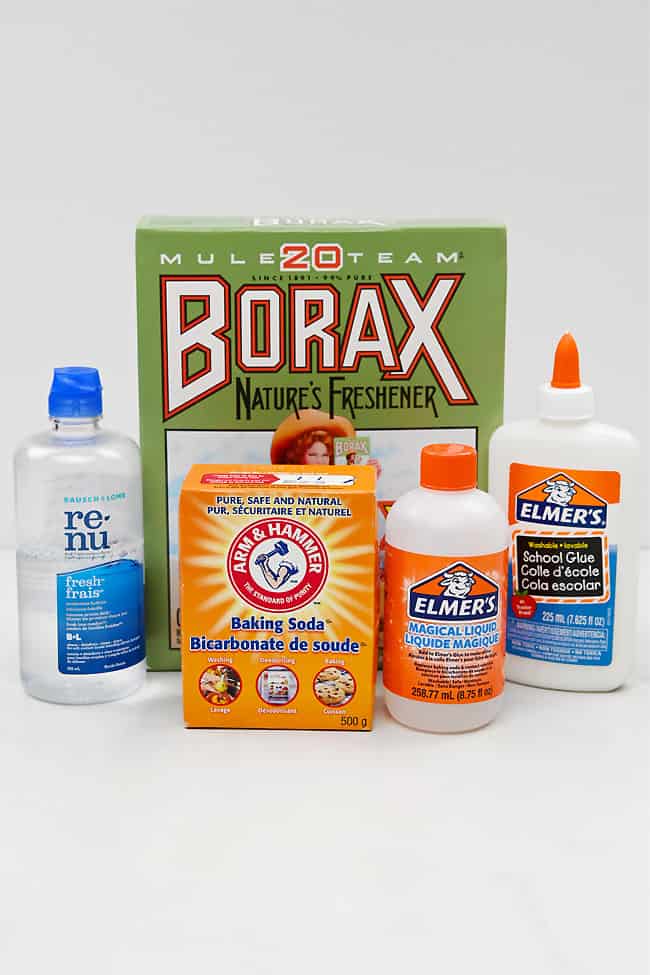
The main ingredients in slime are glue and activator. Glue (whether clear glue or white glue) gives slime its polymer chains, while the borax activator helps those chains link together.
Many slime recipes also include add-ins that change the texture. Shaving cream adds air bubbles and creates fluffy slime that’s lighter and puffier. Clay makes slime thicker, but also softer and more moldable. Foam beads add “crunch”, while glitter, acrylic paint, or food coloring make the slime more fun to look at and play with.
But even with all the different add-ins and types of slime you can make, the basic slime science is the same: polymers in glue react with activator to form slime.
How does slime work?
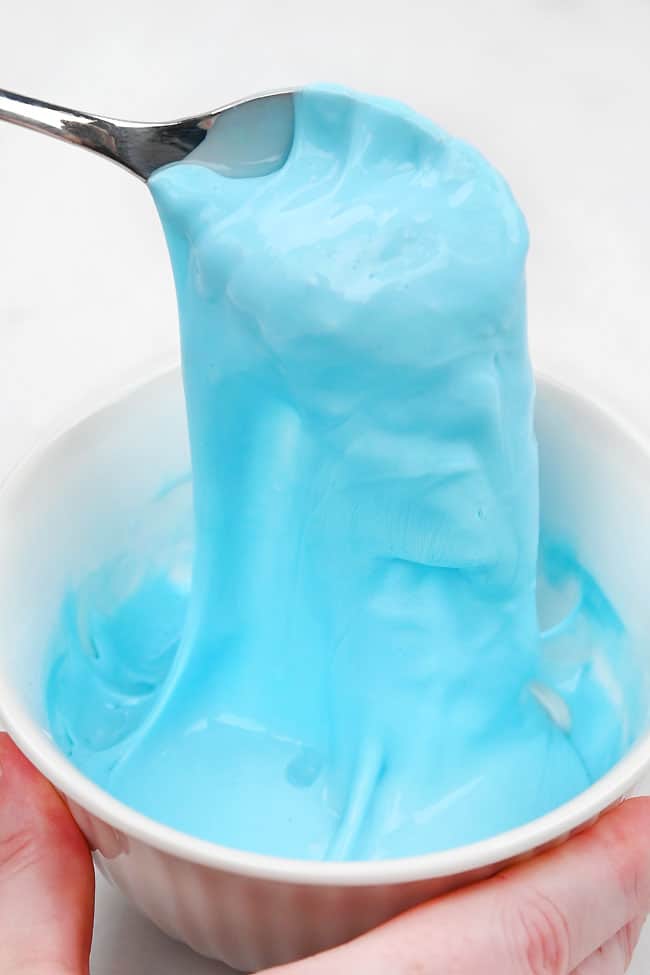
Slime works through a process called cross-linking. Glue contains long polymer chains that can slide past each other, which is why plain glue is thick but still runny. When you add slime activator that contains borax, those ions create tiny links between those polymer chains.
Those links act a bit like bridges, holding the chains together in a loose network. This network traps water and makes the mixture thicker, stretchier, and more elastic. If there are just enough cross-links, the slime stretches nicely. If there are too many cross-links, the slime becomes stiff, rubbery, or breaks instead of stretching.
You can see an example of this science in action when you compare types of slime. A regular slime recipe, like purple slime, is goopy, soft, and stretchy. But if you add a strong borax solution to a smaller amount of glue, it creates a super thick slime that becomes a DIY bouncy ball!
What is slime activator?
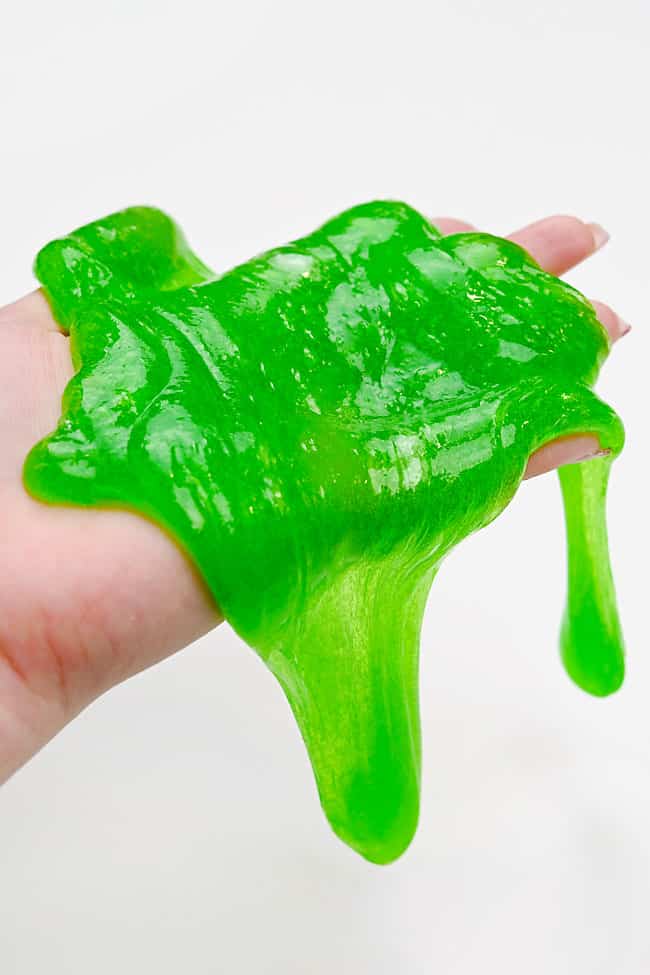
Slime activator is the ingredient that causes glue to turn into slime. For traditional glue-based slime, a slime activator must contain borate ions. Borate ions are the tiny charged particles that help connect the polymer chains in glue and cause the slime to form.
Common slime activators include borax dissolved in water, contact lens solution containing boric acid and sodium borate, and liquid starch. The activator controls how much cross-linking happens in the slime. Too little activator leaves the slime sticky and runny, while too much activator creates too many links and makes the slime firm or rubbery.
Check out our best slime activators post for more information.
What is the chemistry of slime?
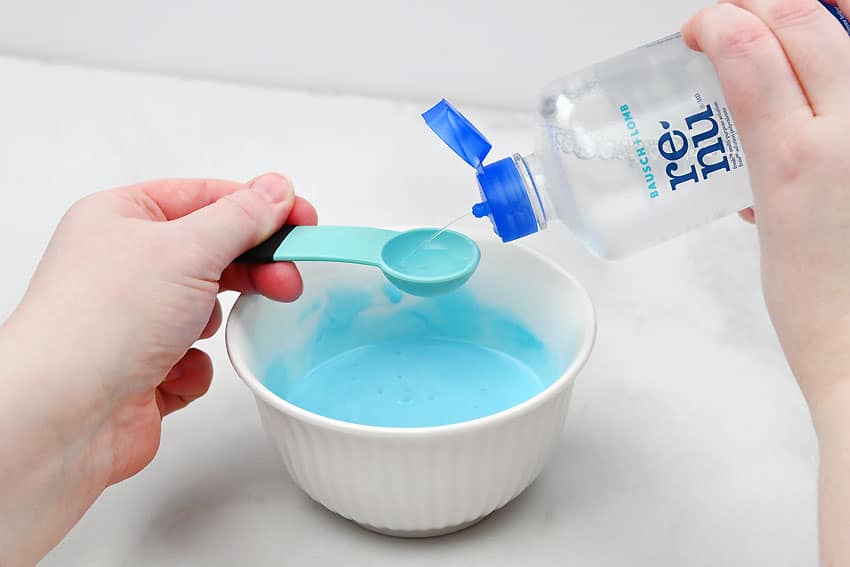
The chemistry of slime is mostly about the polymers and cross-linking that we’ve already talked about. Both clear glue and white school glue contain a polymer called polyvinyl acetate, often shortened to PVA. In the glue, these PVA polymer chains are floating around and can move past each other easily, meaning the glue is still a flowing liquid.
But when slime activator is added, borate ions connect parts of the PVA chains together. This creates a flexible polymer network. Instead of flowing freely like glue, the connected chains move as a thicker, stretchier material. That is the chemical change that turns glue into slime.
Is slime a liquid or a solid?
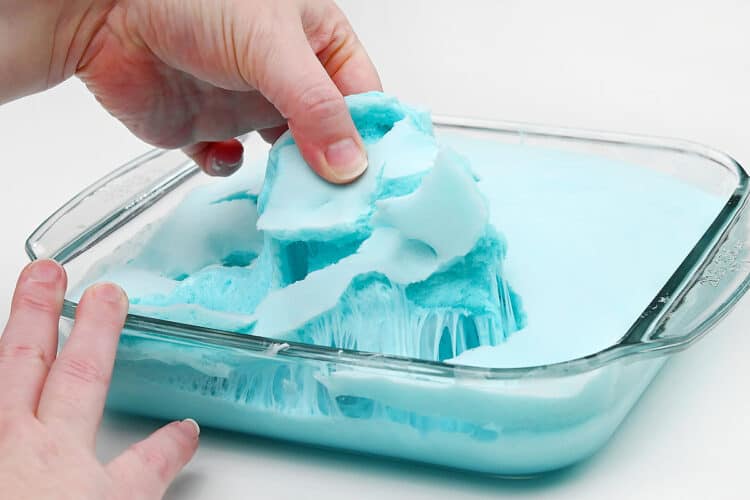
Interestingly enough, slime isn’t really a liquid or a solid. It acts like both, so it’s usually described as a non-Newtonian fluid.
A non-Newtonian fluid is a fluid that doesn’t follow Isaac Newton’s laws of viscosity. Viscosity is another word for a liquid’s thickness, or how it flows. A thin liquid like milk always pours quickly and has a low viscosity. Thicker liquids (such as honey) pour slowly and have a high viscosity.
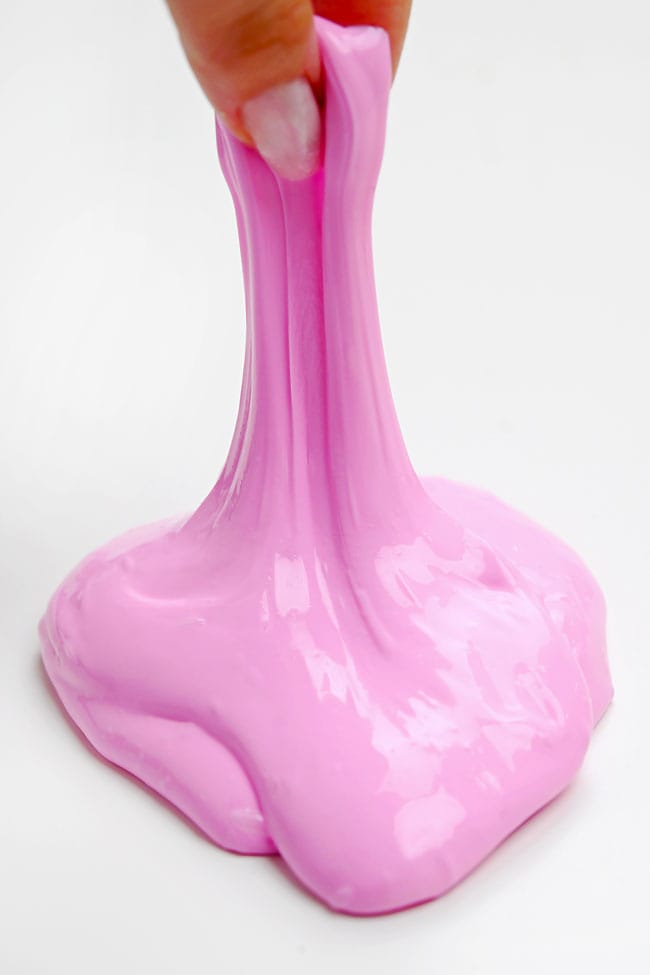
But slime doesn’t have a constant viscosity. It changes depending on how much force you use. When you let slime sit in your hand, it slowly oozes and flows like a liquid. But if you pull it quickly, bounce it, or poke it, slime acts more like a solid. This happens because the polymer network has time to slide and stretch during slow movements, but resists the sudden force of fast movements.
Check out our how to make oobleck post for a good example of a non-Newtonian fluid and how they work.
Why is slime stretchy?
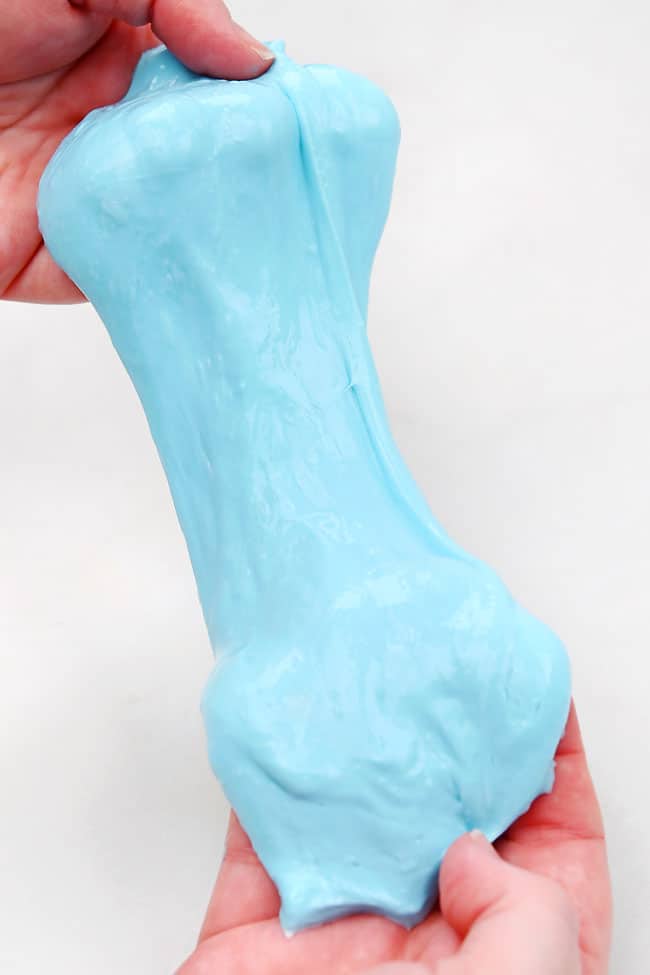
Slime is stretchy because its polymer chains are linked together in a flexible network. The chains are long enough to stretch, but the cross-links help hold them together so the slime doesn’t immediately fall apart.
The stretchiness of the slime depends on how tightly the polymer chains are connected. With the right amount of activator, the chains are linked loosely enough to move and stretch. This is when you get a really goopy slime that oozes nicely.
If you add a bit more activator you can have a thicker slime that still stretches well, but takes longer to “melt” into a puddle. But if you add too much activator to your slime, there are too many cross-links, and the slime becomes tight, rubbery, and less stretchy.
This is why we always recommend adding slime activator slowly, in small amounts. It’s very easy to create too many cross-links, so working with the slime before adding more activator is always the best way to create the perfect slime texture.
We hope you’ve enjoyed learning about the science behind slime as much as we have! Slime is already so much fun to stretch, squish, swirl, and poke, but it’s even more interesting when you understand what’s happening inside that gooey little blob. From polymers and cross-linking to activators and non-Newtonian fluids, there’s a lot of cool slime science hiding in every batch.
The next time you make slime, try noticing how the ingredients change as you mix them together. Watch how the glue thickens, how the activator changes the texture, and how the slime stretches or snaps depending on how you pull it. It’s clear that slime is part craft, part science experiment, and all kinds of fun!
Here’s even more slime recipe ideas:

Now available
Low-Mess Crafts for Kids Book
72 cute and fun crafts that kids and parents alike can enjoy. All with as little mess as possible!
Where to buy:
You can purchase Low-Mess Crafts for Kids from Amazon, or wherever books are sold:
Amazon | Barnes and Noble | Books-A-Million | Indiebound | Amazon Canada



Leave a Reply