

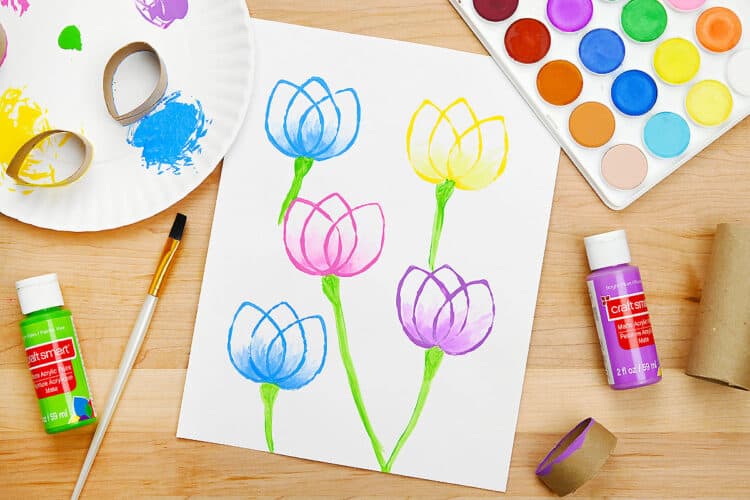
Learning how to paint watercolor tulips is easier than you might think! The soft, flowing petals naturally lend themselves to beginner-friendly watercolor techniques, making it easy to achieve a delicate, botanical look. With just a few simple brushstrokes, you can create vibrant spring tulips that look fresh from the garden — no green thumb required!
Once you master this floral watercolor painting, you can frame your artwork, use it for DIY greeting cards, or add it to your spring home decor. Whether you’re new to watercolor painting or just looking for a relaxing artistic escape, this project is the perfect way to unwind and let your creativity bloom. So grab your watercolor paints, pour yourself something warm (or bubbly — we won’t judge), and let’s create some petal-perfect masterpieces!

This post contains affiliate links. If you use these links to buy something, we may earn a small commission at no extra cost to you. This helps support our website and allows us to keep creating fun, free content.
How to Paint Watercolor Tulips
Materials:
Equipment:
Watch the step-by-step video tutorial:
Instructions:
Step 1: Find what you need
- Gather your supplies and materials.


Step 2: Set up your work station
- Arrange your materials on your workstation in a way that makes them all easy to reach.You’ll have a piece of watercolor paper, a palette of watercolor paints, a glass of water, and a piece of paper towel.

Step 3: Paint the blooms
- Dip the paintbrush in water, then swirl it in the paint.

- Paint a “U” shape on the paper.
- Fill the “U” in lightly.
- Rinse the brush and dab the excess water on the paper towel.
- Run the damp paintbrush over the shape to smooth out the paint consistency. Add a line outside of one edge of the “U” shape, leaving a small gap between that shape and the new line.
- Repeat to add more blooms in different colors at different angles.


Step 4: Add darker edges
- Go back to the first flower, which should now be dry. Gather more paint and less water on the brush this time, and outline the petals. Then rinse the brush, dab the excess water off, and drag it along the outline to soften the edges.
- Repeat with the remaining flowers.


Step 5: Add the stems and leaves
- Rinse the brush and swirl it in a light green paint. Use the paint to draw stems coming from the bottom of the flowers.
- Add long leaves to some of the stems.
- Rinse the brush and pick up some darker green paint. Add a line of the darker green to one side of the stems and leaves.
- Rinse the brush, blot the excess water on paper towel, and use the damp brush to soften the edges of the dark green lines.
- Your watercolor tulip painting is complete!


Helpful Tips:
- When drawing the stems, try to move your whole arm instead of flicking with your wrist. This makes it easier to get a smooth line.
- You should also keep a consistent amount of pressure when painting the stem. If you press harder, you’ll get a thicker line, while pressing lighter will give you a thinner line.
- If the paint is too dark when you first paint your petals, take a slightly damp or dry brush and run it through the middle of the petal. This will absorb some of the wet paint. You can also dab it up with a paper towel, but be careful not to smudge the edges of your petals.

What type of paper should I use for my watercolor tulip painting?
It’s important to use a paper designed for wet media when painting tulips with watercolors. You can use a watercolor paper or a mixed media paper for this painting.
These papers come in different weights, with thicker papers being more durable and able to withstand more water than thinner papers. Thicker papers are also more expensive. Use the paper that balances quality and cost best for you.

Why do the stems and leaves look so bright in my tulip watercolor painting?
When learning how to paint watercolor tulips, you may notice that the stems and leaves in your watercolor flower painting look brighter than those in nature. Many watercolor paint sets include greens that appear too vivid, making them stand out more than you’d like.
To achieve a more natural green shade, try mixing in a tiny amount of red (green’s complementary color). Start with the smallest amount possible, as you can always add more if needed. If the colour becomes too muted, or turns gray or brown, simply add more green watercolor paint to balance it out.

What watercolor paints are best for learning how to paint watercolor tulips?
Watercolors come in a variety of forms – pans (like we used), tubes, liquids, and powders or crystals.
We recommend using pans or tubes for this tutorial. Both of these types of watercolor paint are easy to find at craft stores and are very beginner-friendly, making them perfect for this project.

Learning how to paint watercolor tulips has never been easier, and these delicate blooms are bursting with charm! Frame your floral watercolor painting for spring home decor, gift it to a fellow flower enthusiast, or turn it into a handmade greeting card for a personal touch.
However you choose to use your watercolor tulip painting, it’s a beautiful way to celebrate the soft, flowy elegance of spring flowers!
Here’s even more flower painting ideas:

Now available
Low-Mess Crafts for Kids Book
72 cute and fun crafts that kids and parents alike can enjoy. All with as little mess as possible!
Where to buy:
You can purchase Low-Mess Crafts for Kids from Amazon, or wherever books are sold:
Amazon | Barnes and Noble | Books-A-Million | Indiebound | Amazon Canada







Leave a Reply