
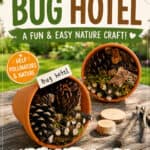
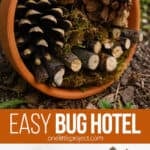
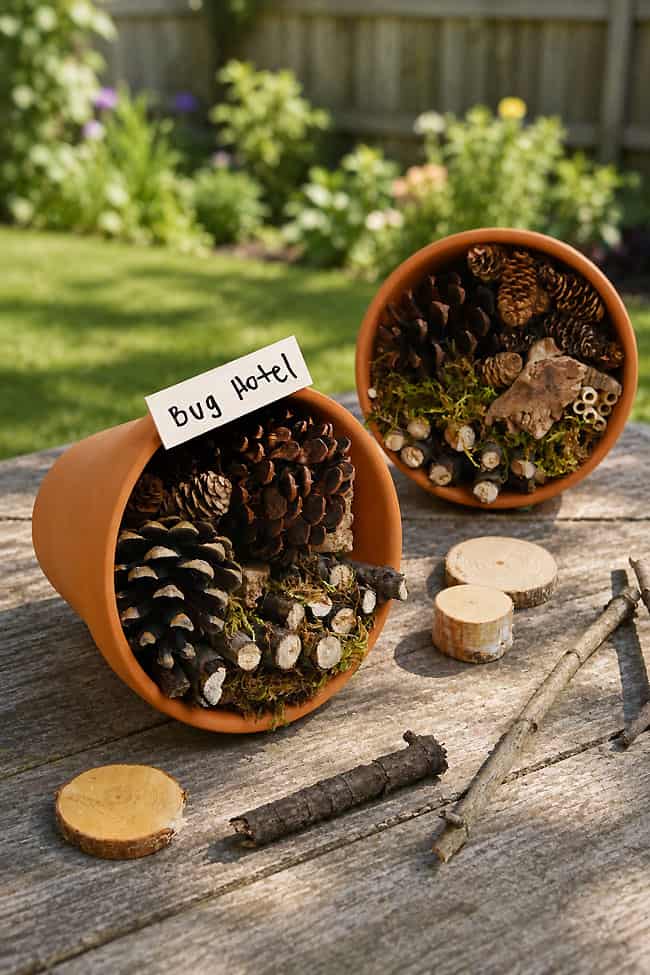
Give backyard bugs a cozy place to hide with this fun and educational bug hotel craft! Kids can gather pinecones, sticks, moss, bark, and other natural materials, then arrange them inside a flower pot to create tiny nooks and crannies for insects to explore.
This DIY bug hotel is a great way to teach kids about insects, habitats, and the helpful role bugs play in the garden. It encourages outdoor exploring, nature observation, and hands-on learning, while giving kids a simple way to connect with the small creatures living right outside their door.
This post contains affiliate links. If you use these links to buy something, we may earn a small commission at no extra cost to you. This helps support our website and allows us to keep creating fun, free content.
How to Make a Bug Hotel
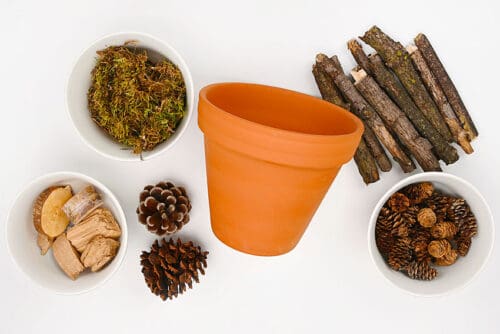
Materials:
See the craft in action:
Instructions:
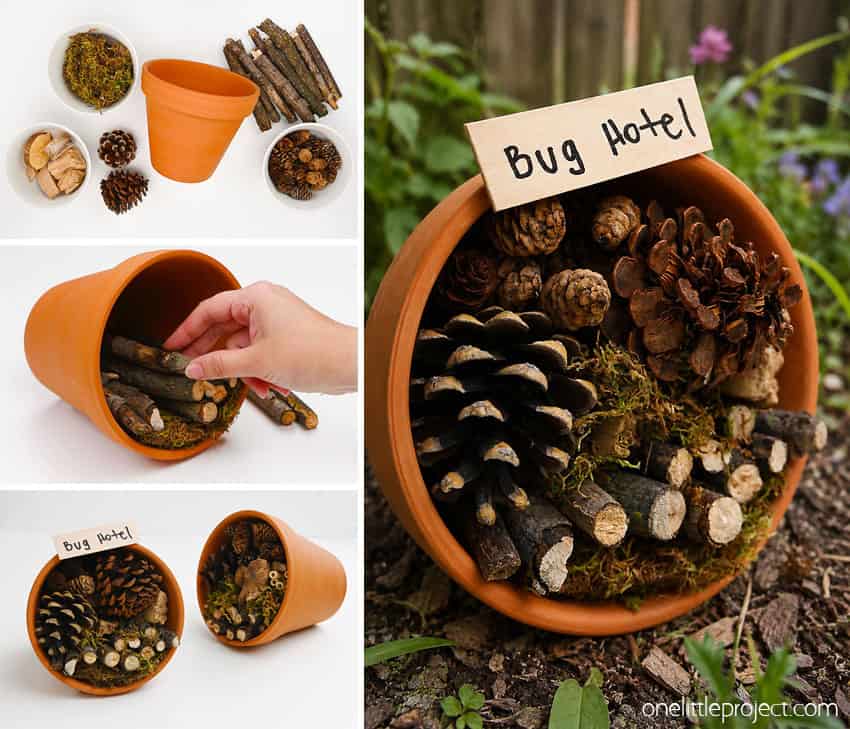
- Gather your supplies and materials.

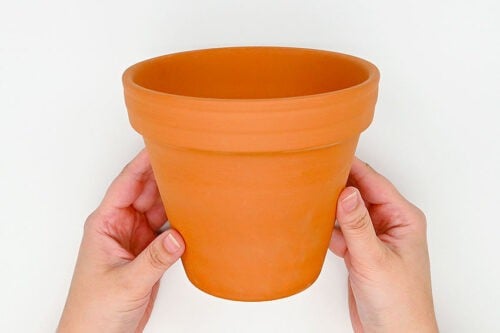
- Choose a vessel for your bug hotel. We’re using a clay pot, but you can also use a wood box or cardboard box.The insect hotel will be laying sideways, so the pot’s opening is on the side.

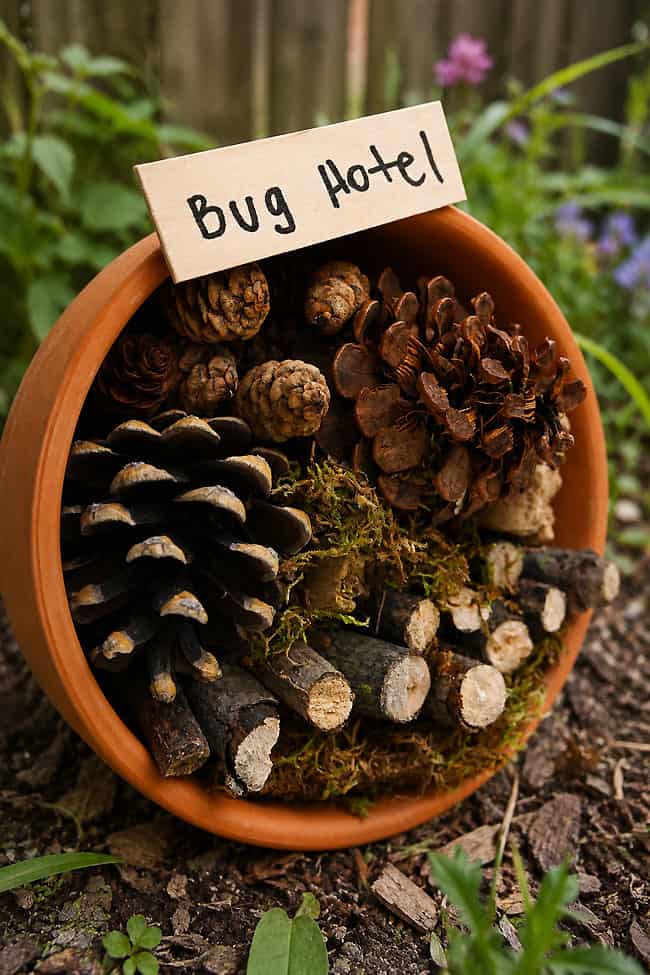
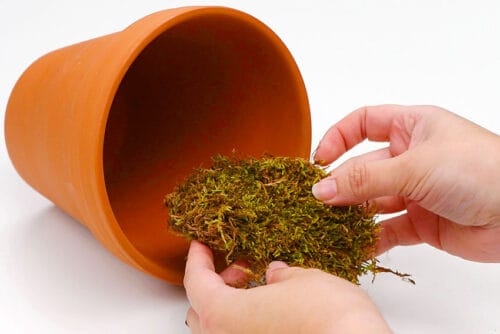
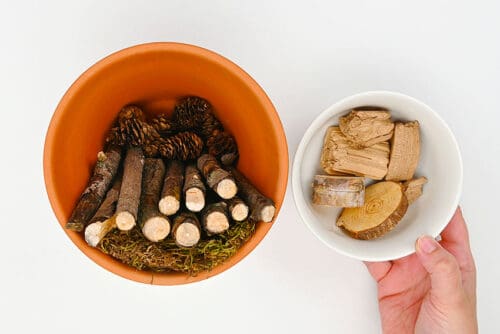
- Begin by adding a base layer. We’re putting moss in so it lays against the side of the pot.
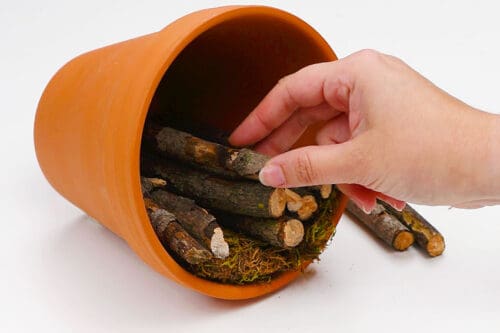
- Next add some sticks to the pot. These create a layer that keeps some space between them.
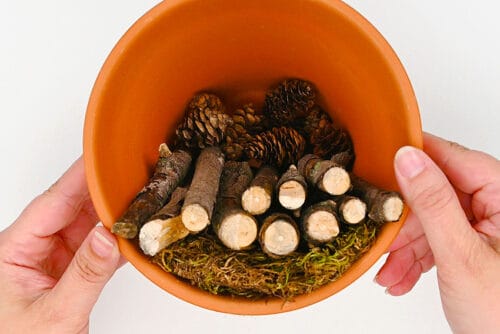
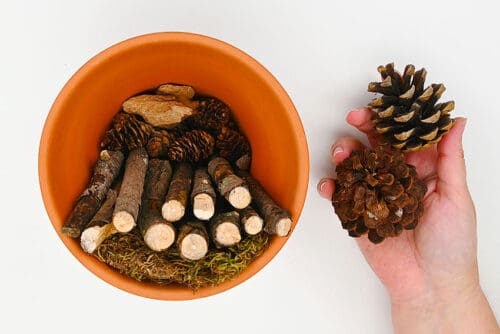
- Place some small pinecones in the pot and let them fall to the bottom/back of the hotel.
- We also gathered some small wood slices and wood pieces. Place a few in the bottom now and keep the rest to fill in spaces at the end.
- Choose a couple bigger items to fill the top of the pot. Here we added 2 large pinecones.
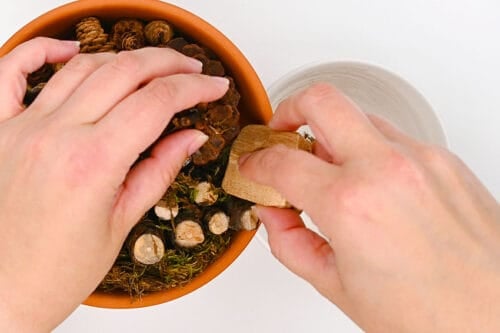
- Next, fill in any large gaps. The tiny pinecones and small wood pieces come in handy here.
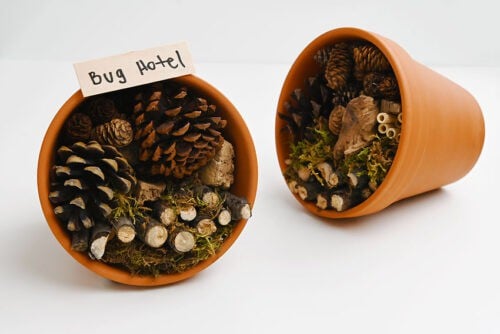
- Your bug hotel is complete! Now place it outside so the bugs can move in.
Helpful Tips:
- If you don’t have a clay pot, you can also use a small cardboard box, wooden crate, tin can, or other sturdy container. Just make sure it has enough space to hold the sticks, pinecones, bark, and other natural materials.
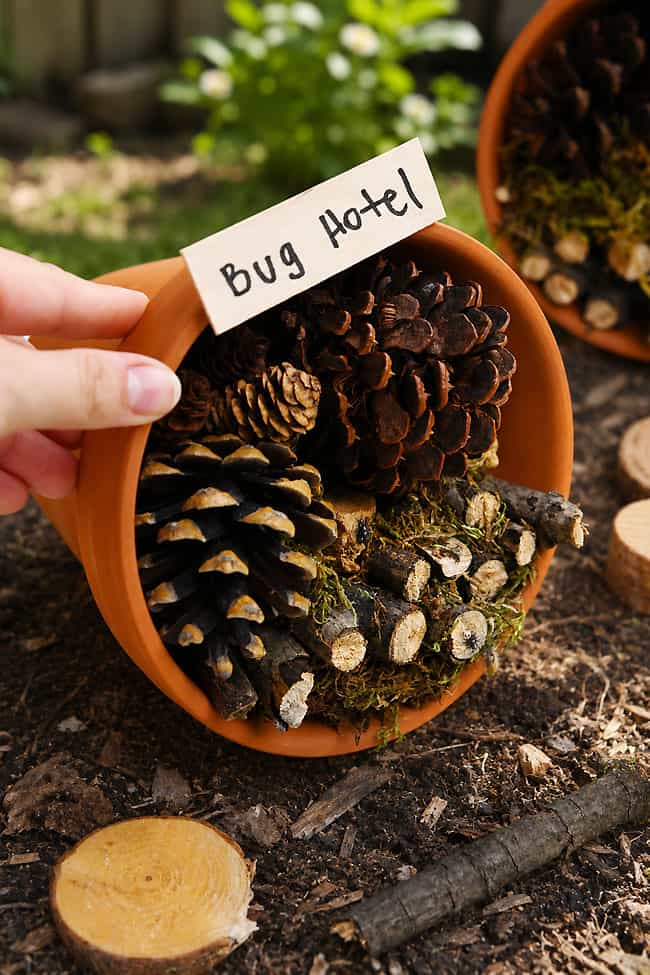
- You can make a little sign that says “Bug Hotel” or “Insect Hotel” and place it above or beside your pot. We made our sign with a large popsicle stick and marker, but you can also use a small wood slice or even cardboard.
- Place your bug hotel in a sheltered spot outdoors, such as near a garden, by a shrub, or under a deck. A partly shaded area that stays somewhat dry is best, since too much rain can make the materials soggy.
What materials do I need to make a bug hotel?
You can make a bug hotel with lots of simple natural materials from your yard or garden. Try using moss, sticks, small pieces of wood, bark, pinecones, twigs, and wood slices.
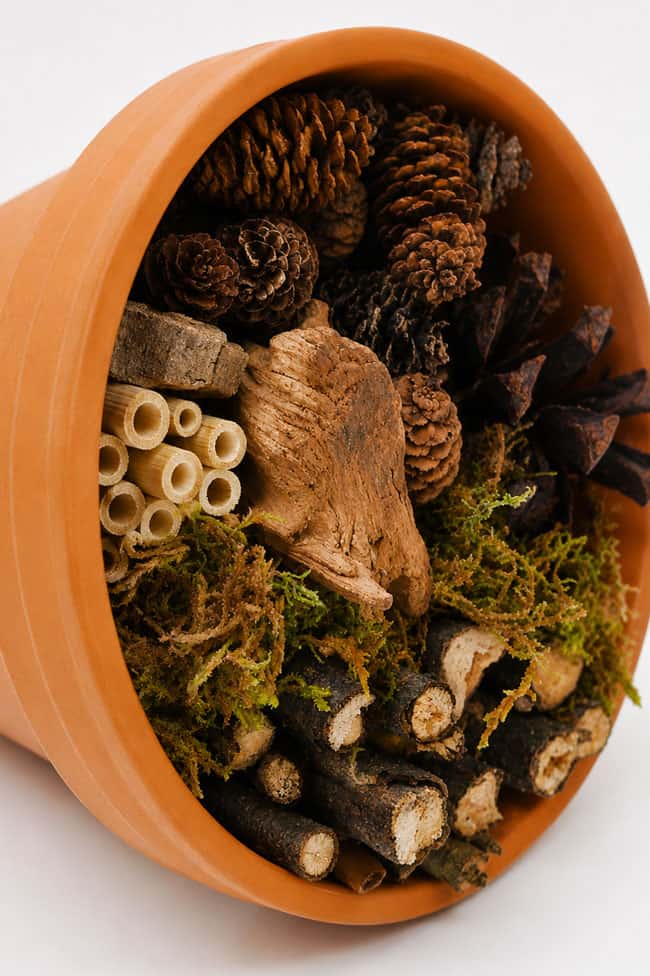
You can also add bamboo straws, cardboard, paper rolls, egg cartons, rocks, popsicle sticks, acorns, dried leaves, and other small items with holes, gaps, or texture. The goal is to create lots of tiny hiding places where insects can crawl, rest, and explore.
What benefit does an insect hotel provide?
An insect hotel gives small bugs a safe place to hide, rest, and shelter from wind, rain, and predators. It can also provide nesting spots for certain beneficial insects, depending on the materials you use and where you place it.
Bug hotels are also a great educational activity for kids. They help children learn about insect habitats, pollinators, decomposers, and the important role bugs play in the garden. Instead of only seeing bugs as “creepy crawlies,” kids can observe them up close and learn how many insects help plants grow, break down natural materials, and support the outdoor ecosystem.
What bugs will move into the hotel?
The bugs that visit your hotel will depend on where you live, where you place it, and what materials you use. You may see spiders, beetles, ants, woodlice, earwigs, ladybugs, solitary bees, or other small insects exploring the spaces.
Spiders may be some of the first visitors, especially if there are lots of little gaps for them to hide in. Other insects may come and go over time. Some bugs might use the hotel as a temporary hiding spot, while others may stay longer if the space feels safe and protected.
Try checking the bug hotel every few days and observing it gently without disturbing the insects. Kids can keep a simple nature journal and draw or list the bugs they notice.
How can I make a bee hotel?
To make a bee hotel, focus on creating small nesting tubes for solitary bees. Unlike honeybees, solitary bees don’t live in big hives. Many of them nest alone in hollow stems, bamboo, or small holes in wood.
You can bundle bamboo straws, paper straws, or hollow plant stems together and place them inside a container. Make sure the tubes are open at one end and closed at the other, so the bees have a protected place to nest. You can also drill smooth holes into untreated wood, but an adult should do this part.
Place the bee hotel in a sunny, sheltered spot, ideally facing morning sun and protected from heavy rain. Avoid using plastic straws, painted wood, or treated lumber. Once the bee hotel is outside, leave it undisturbed for the season so any nesting bees can use it safely.
This bug hotel is a fun way to bring a little nature learning right into your backyard. Kids can build, explore, observe, and discover how many tiny creatures are living all around them.
Place your insect hotel in a quiet outdoor spot, then check back to see what visitors arrive. Whether it becomes a hiding place for beetles, spiders, or other little garden bugs, it’s a simple project that turns everyday natural materials into a hands-on science activity.
Here’s even more nature craft ideas:


Now available
Low-Mess Crafts for Kids Book
72 cute and fun crafts that kids and parents alike can enjoy. All with as little mess as possible!
Where to buy:
You can purchase Low-Mess Crafts for Kids from Amazon, or wherever books are sold:
Amazon | Barnes and Noble | Books-A-Million | Indiebound | Amazon Canada




Leave a Reply